Re-Roofing Flat and Low-Slope Roofs
TPO Roof Replacement
When a flat roof has reached the end of its life, replacing the membrane is usually cheaper over time than patching it again. Here is how we approach a full TPO roof replacement.
When a Roof Needs Replacing, Not Repairing
Every flat roof reaches a point where repairs stop being economical. The membrane has done its work, the surface has broken down generally rather than in one spot, and each patch buys less time than the last.
A replacement is also the only realistic chance to fix what sits underneath. Wet insulation, damaged substrate, falls that were never quite right, outlets in the wrong place — none of that can be corrected from the top of an existing roof.
- Leaks appearing in more than one place, or returning shortly after being patched
- Large areas of the membrane that have gone brittle, cracked or lost surface
- Seams and laps lifting or opening along their length
- Water ponding on the roof days after the rain has stopped
- Soft or spongy spots underfoot, suggesting moisture in the substrate below
- Patch on top of patch, where the roof has been repaired many times already
If only one or two of those apply, a targeted repair may still be the better answer. We will say so if that is what we find.
Our Roof Replacement Process
A replacement is more involved than an installation because of what has to come off first — and because of what we find once it does.
- 1
Roof inspection
We assess the existing roof, look at how it is built up and confirm whether replacement is genuinely the right call rather than repair.
- 2
Assessment and preparation
Scope agreed in writing, access and safety arranged, materials and waste handling planned, and timing set around weather and your use of the building.
- 3
Strip-out
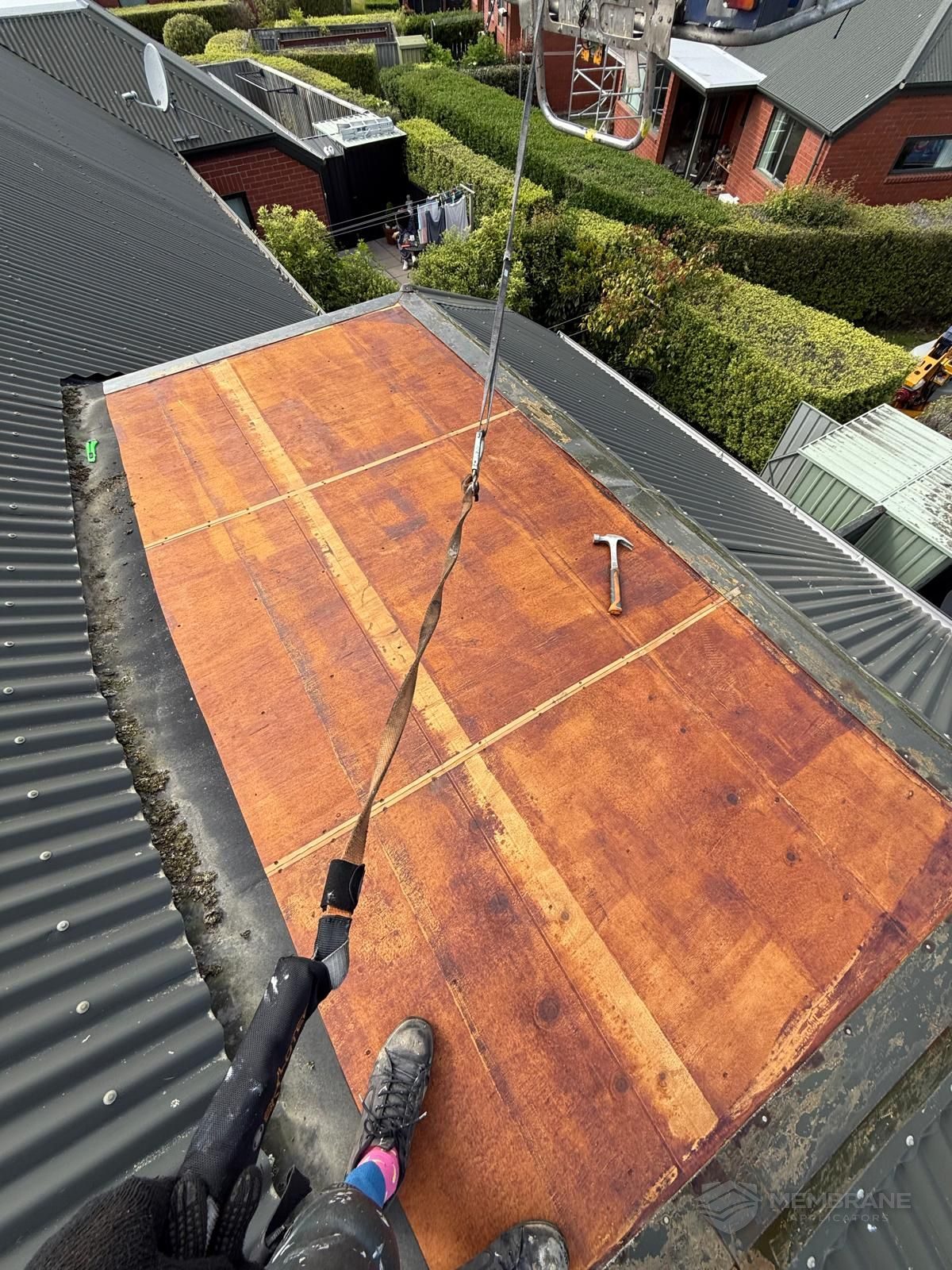
The failed covering is removed and taken away, exposing the substrate so we can see what we are actually dealing with.
- 4
Substrate preparation
Damaged or wet substrate is repaired, the surface is made sound and dry, and falls to the outlets are addressed while the roof is open.
- 5
Membrane installation
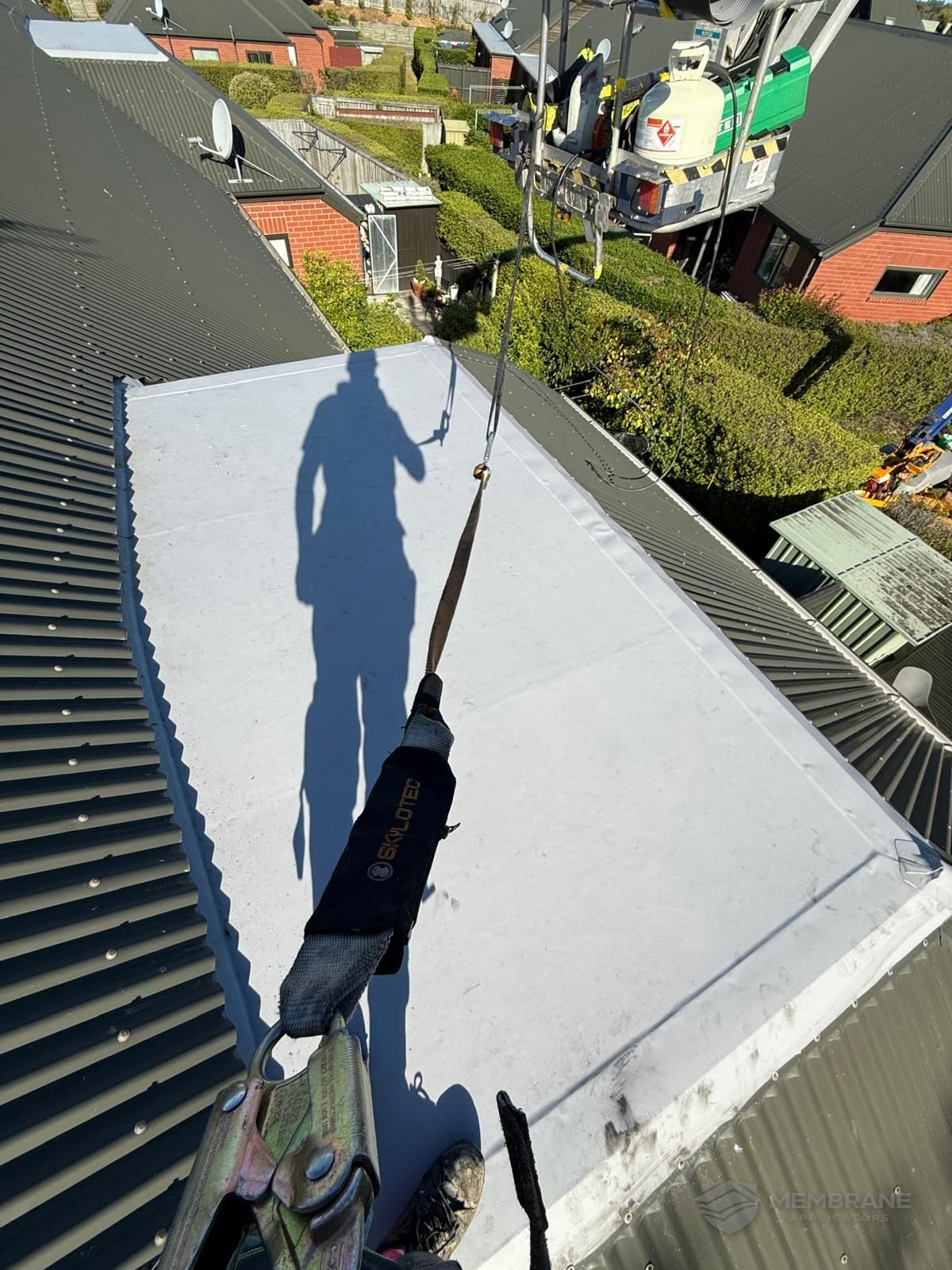
New TPO sheets are set out and fixed so the laps run correctly with the fall of the roof.
- 6
Hot-air welding
All laps are hot-air welded and the welds checked, so the new roof behaves as a single continuous sheet.
- 7
Flashings, detailing and handover
New flashings at upstands, outlets and penetrations, terminations completed, roof cleaned down and walked with you before handover.
What You Get From a Replacement
A continuous welded surface
A new membrane welded as one piece, rather than an old roof with a history of patches over it.
Substrate problems dealt with
Wet or damaged material is removed while the roof is open instead of being sealed under a new layer.
Corrected falls and outlets
Where water has been sitting on the roof, the falls and drainage can be improved as part of the work.
New details throughout
Upstands, flashings, penetrations and terminations are all redone, not reused.
We replace roofs on both residential and commercial buildings, mostly around Auckland. If you are not sure TPO is the right membrane for the replacement, our flat roof membrane comparison sets out the alternatives.
Roof Replacement FAQs
If the leaks are isolated and the rest of the membrane is in good condition, repair is usually the sensible option. If the membrane is breaking down generally, the substrate is wet, or you are patching the same roof repeatedly, replacement stops the running cost and lets the underlying problems be fixed. We tell you which one your roof needs after inspecting it.
Sometimes, but only when the existing build-up is dry and sound and the details still work. If moisture is trapped underneath, covering it over seals the problem in and it will keep working on the structure. We check for that before recommending an overlay.
It depends on the area, access, how much strip-out and substrate repair is needed, and the weather. A small residential flat roof is typically a matter of days; a large commercial roof is planned in stages so the building can keep operating. We give you an expected timeframe with the quote.
We only open up as much roof as we can make watertight again, and we plan the sequence around the forecast. That is a large part of why the staging is agreed before we start rather than as we go.
There is no fixed rate, because the strip-out, substrate condition, access and amount of detail work vary hugely from roof to roof. We inspect the roof and give a written quote with the scope set out, so you can see what is included.
Is Your Flat Roof at the End of Its Life?
We will inspect it and tell you honestly whether it needs replacing or repairing.
Request a Quote