Choosing the Right System
Flat Roof Membrane Options
Four membrane systems are commonly used on New Zealand flat roofs. We install all of them, so here is an honest comparison rather than a sales pitch for one.
Why a Flat Roof Needs a Membrane
A pitched roof works by shedding water quickly down overlapping sheets or tiles. A flat or low-slope roof cannot do that. Water sits on it, moves slowly, and eventually leaves through a handful of outlets — so the covering has to be genuinely waterproof rather than simply water-shedding.
That is what a membrane is: one continuous waterproof layer, taken up every upstand and sealed at every penetration. The differences between the systems below come down to what the layer is made of and how its joins are formed.
The Four Systems Compared
TPO membrane
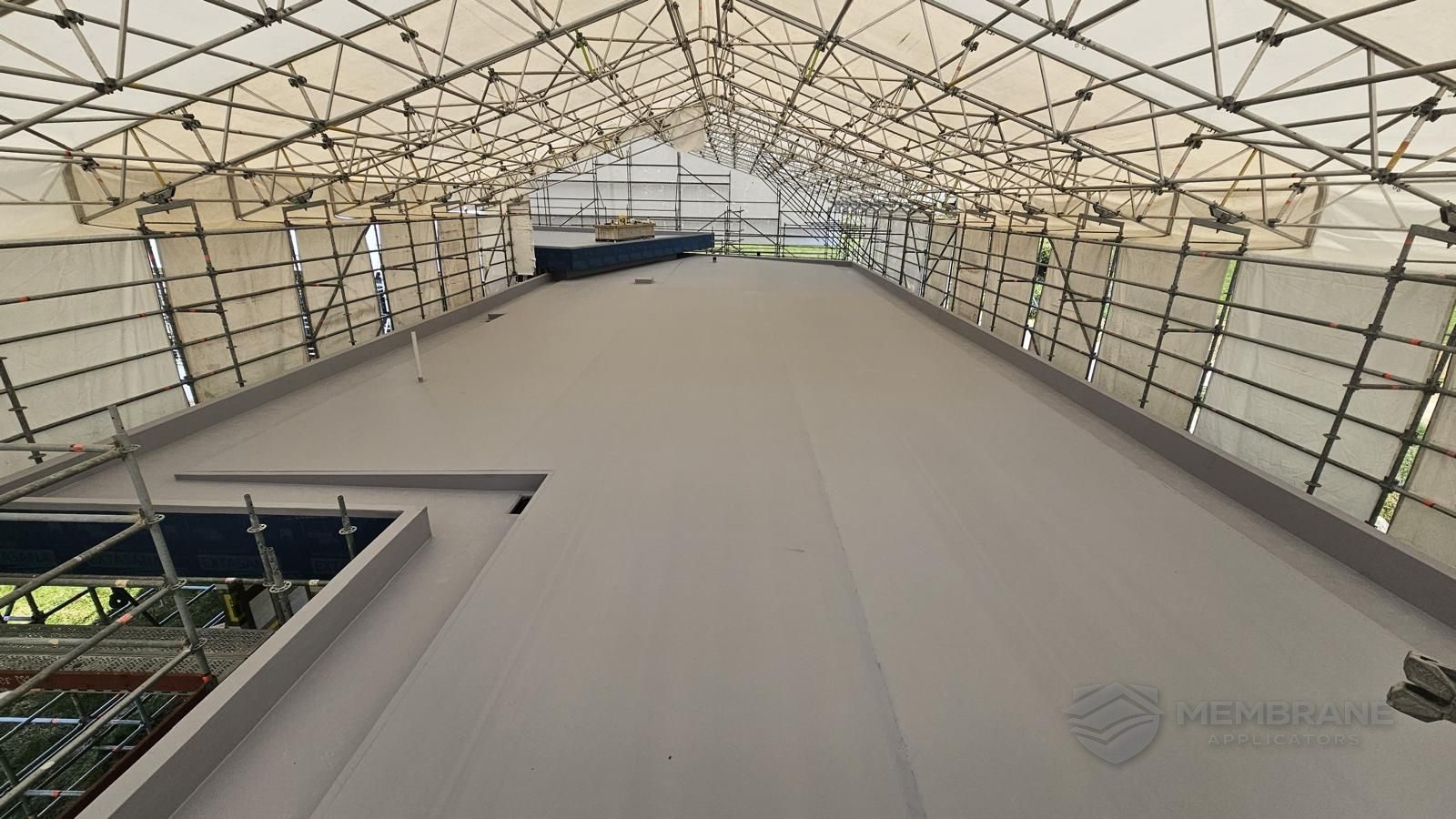
Single-ply thermoplastic, hot-air welded
Typically suits: New flat and low-slope roofs, large commercial areas, gutters and parapets, roofs where a light-coloured finish is wanted.
Laps are welded so the sheets fuse together. Wide rolls mean fewer seams over open areas, and no open flame is used during installation.
Read more about TPO membrane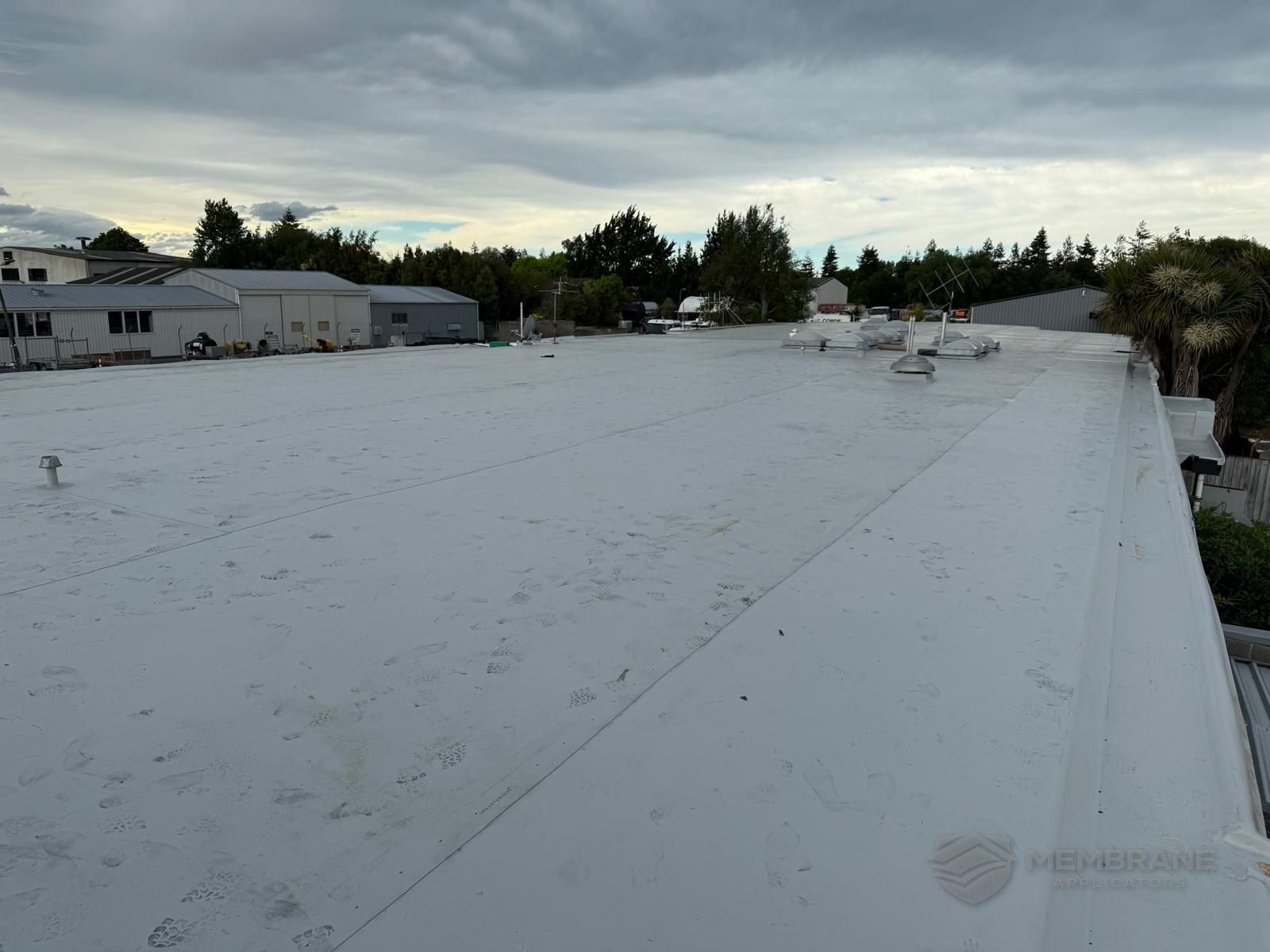
Butynol membrane
Synthetic rubber sheet, adhesive bonded
Typically suits: Roofs with an existing Butynol system, awkward shapes, and situations where a highly flexible dark membrane is preferred.
Long established in New Zealand and very flexible. Joins are bonded with adhesive rather than welded, and the surface is dark rather than reflective.
Read more about Butynol membrane
Liquid applied membrane
Coating applied wet, cures seamless
Typically suits: Complex roofs with many penetrations, overlays onto sound existing membrane, and details that are difficult to sheet neatly.
Because it is applied as a liquid it forms one continuous layer with no joins at all, following whatever shape it is applied over.
Read more about Liquid applied membraneWhat Actually Decides the Choice
In practice the decision is made by the roof, not by the product brochure. These are the things we look at during an inspection.
What is already on the roof
Matching or replacing an existing system is often the deciding factor — particularly on a repair, where compatibility matters more than preference.
How much detail there is
A simple open area suits sheet membrane. A roof covered in penetrations, awkward corners and changes of level may be better served by a liquid system.
Whether the roof gets walked on
Foot traffic, plant maintenance access and finished deck surfaces all change what the build-up needs to handle.
Sun exposure and colour
A light membrane reflects more of the sunlight that lands on it. A dark one absorbs more. On an exposed roof that is a real difference.
The building underneath
Occupied premises, stored goods and combustible substrates all argue against installing with an open flame.
Structural load
Single-ply membranes are light. A heavy built-up system is not always something an existing structure should be asked to carry.
For repairs to an existing Butynol roof specifically, our specialist Butynol repair website covers that work in more detail. It is run by the same team as this site.
Flat Roof Membrane FAQs
There is no single best system — it depends on the roof. TPO is a strong general choice for new flat and low-slope roofs and large areas, Butynol suits matching or repairing existing Butynol work, and liquid membrane suits complicated detail and overlays. Because we install all three, we can recommend on the merits rather than on what we happen to carry.
TPO is a thermoplastic and its laps are hot-air welded, so the sheets fuse together. Butynol is a synthetic rubber and its joins are bonded with adhesive. TPO is normally light coloured; Butynol is dark. Both are established flat roof membranes in New Zealand.
Sometimes. It depends on whether the existing build-up is dry and sound and whether the details still work with the extra thickness. If moisture is trapped underneath, an overlay seals the problem in rather than solving it, so we check that on site first.
Yes. TPO is our main specialty, and we also install Butynol and liquid applied membrane. That is deliberate — it means the recommendation you get is based on your roof.
Book a roof inspection. We look at the existing build-up, the falls, the drainage and the details, then explain the realistic options and what each one would involve.
Not Sure Which System Your Roof Needs?
Book a roof inspection and we will set out the realistic options for your building.
Request a Quote