For Homes and Homeowners
Residential TPO Roofing
Flat roof sections, garages, decks and additions — waterproofed with welded TPO membrane and finished with the kind of detailing that decides whether a home flat roof lasts.
Flat Roofs on Houses Are Not Small Commercial Roofs
A house flat roof is usually small, but it has a high proportion of detail: a wall on one side, a door threshold on another, a couple of vents, a downpipe and an edge that has to look tidy from the window above.
Almost every residential leak we are called to comes from one of those junctions rather than from the middle of the roof. So on a home, the value is not in how quickly the membrane goes down — it is in how carefully the edges are finished.
TPO works well here because the welded laps behave as one sheet and the light finish stays looking clean. If your roof is an existing membrane that has started leaking, see TPO roof repairs.
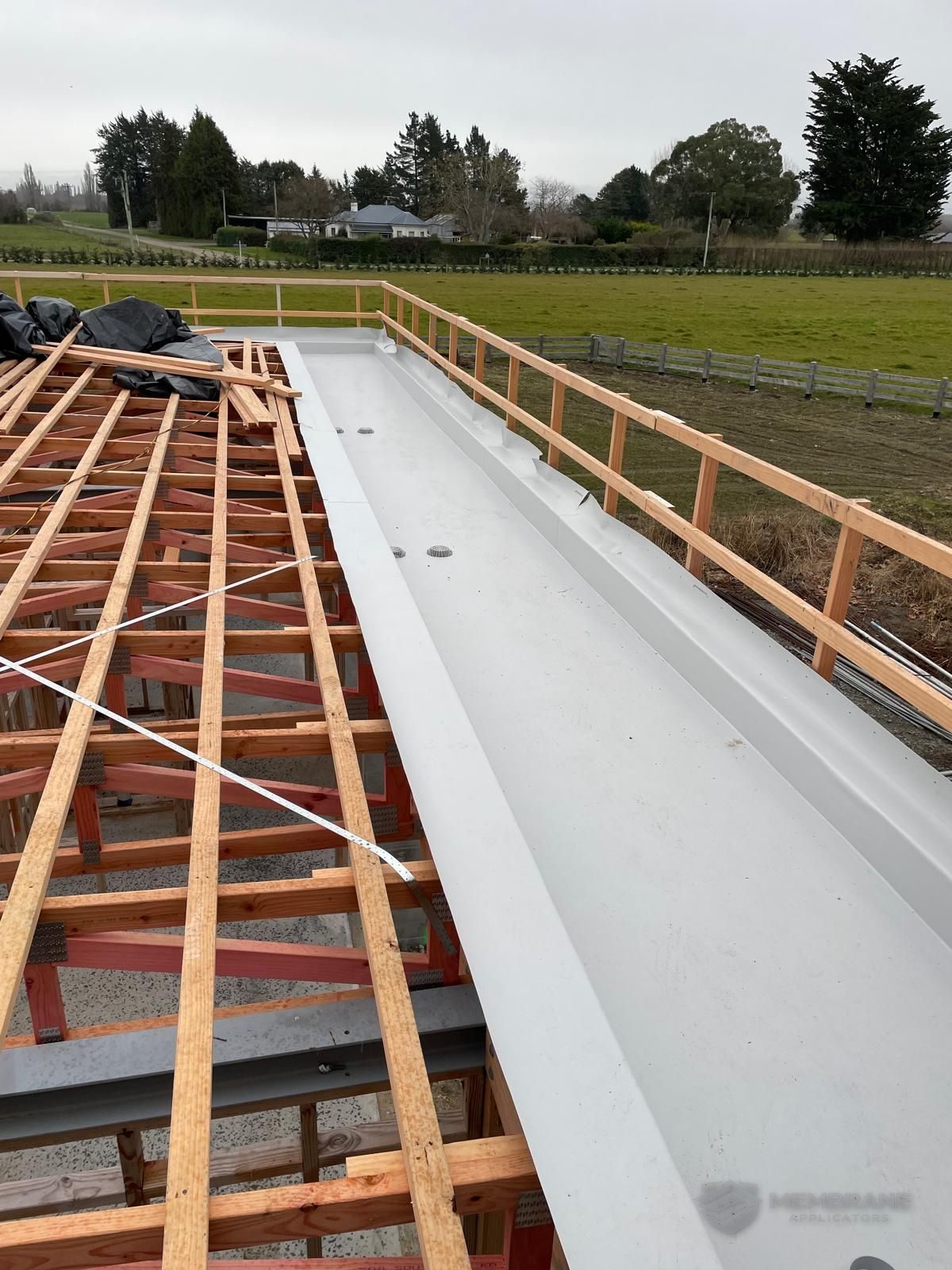
Where We Install TPO on Homes
Flat roof sections
Low-slope roofs over living areas, kitchens and bedrooms, where a leak goes straight into the finished interior.
Garages and carports
Detached and attached garage roofs, often the first flat roof on a property to be left too long.
Decks and balconies
Waterproofing beneath a deck surface, including thresholds and upstands where the deck meets the house.
Additions and extensions
New flat-roofed rooms and studios, where the membrane and its junctions with the existing house need to be right from the start.
Box gutters and parapets
Concealed gutters behind a parapet — the detail behind a large share of residential flat roof leaks.
Small awkward roofs
Porches, bay window tops, dormer cheeks and the small areas that other roofers would rather not deal with.
What Happens on a Residential Job
Same seven steps as any TPO roof, scaled to a home and planned so you are not left with an open roof overnight.
- 1
Roof inspection
We come out, get on the roof, and look at the existing surface, the falls and where water is going — or not going.
- 2
Assessment and preparation
We explain the options in plain language and put the scope and timing in writing before anything is booked in.
- 3
Substrate preparation
The surface is cleaned, dried and made sound. Soft or damaged material is dealt with rather than covered over.
- 4
Membrane installation
TPO is set out and fixed down so the laps run with the fall of the roof.
- 5
Hot-air welding
Laps are welded with hot air, not an open flame — which matters when the roof is attached to your house.
- 6
Flashings and detailing
Upstands against walls, thresholds at doors, outlets, vents and pipe penetrations all detailed and sealed.
- 7
Final inspection
We check the welds and details, clear the outlets, take our rubbish with us and walk the finished roof with you.
What We Ask of You, and What You Get
- A written quote with the scope set out before we book anything in
- An explanation of what is wrong, in language that is not sales talk
- Access and safety arranged with you, not sprung on you
- Hot air rather than open flame on your house
- Outlets and gutters left clear at the end
- Site cleaned down and rubbish taken away
Not sure TPO is the right membrane for your house? Our flat roof membrane comparison covers the alternatives, and if you are in the city our Auckland page covers the local conditions.
Residential Roofing FAQs
Yes, for flat and low-slope areas. It is light, the laps are welded rather than glued, and the finished surface is flat and uniform. It is a common choice for flat roof sections, garages, decks and additions.
TPO is normally supplied in white or light grey, so it reads as a clean, flat, uniform surface rather than a dark patched one. That matters when a flat roof is overlooked from an upper floor or a neighbouring property.
Yes. Deck areas need the membrane taken properly up the surrounding upstands and correctly detailed at the door threshold. Getting those junctions right is what stops water tracking back into the house.
For most residential jobs, no. TPO is installed with hot air rather than an open flame, and work is planned so the roof is watertight at the end of each day. We will tell you upfront if any part of the job affects access.
A small flat roof, garage or deck is typically a matter of days, depending on access, how much preparation is needed and the weather. We give you an expected timeframe with the quote.
It depends on the area, access, how much strip-out and substrate repair is required and how many details there are. We inspect the roof and give you a written quote for your specific job rather than a rate that will change later.
Flat Roof or Deck Needing Attention?
Send us the address and a few photos and we will arrange a look at it.
Request a Quote