
Membrane Detailing
Roof Penetrations & Detailing
The open field of a roof is the easy part. It is the penetrations, upstands, flashings, gutters and outlets that decide whether a flat roof lasts — and that is where we take the most care.
The Details Decide the Roof
Ask anyone who works on flat roofs where they leak, and the answer is the same: at the details. The wide open field of a welded membrane very rarely fails. What fails is the collar around a pipe, the upstand at a wall, the joint at an outlet.
Every one of those details is a place where the membrane has been cut, turned up, or joined to something else. Done properly, welded and flashed, they last as long as the roof. Done quickly, they are the first thing to let go.
This is the part of a TPO installation we care about most — and the part most worth getting a specialist for.
Details We Take Care Of
Pipe and vent penetrations
Every pipe, vent and flue through the roof is a hole in the membrane. Each one is flashed with a welded collar so water cannot track down it.
Plant and AC bases
Air conditioning units, ducting and cable trays sit on the roof on bases and bearers that all have to be sealed into the membrane.
Upstands and thresholds
Where the roof meets a wall, door or step, the membrane is turned up to form an upstand so water is kept out of the building.
Parapet flashings
Parapet walls are capped and flashed so wind-driven rain cannot get behind the membrane at the edge of the roof.
Internal gutters
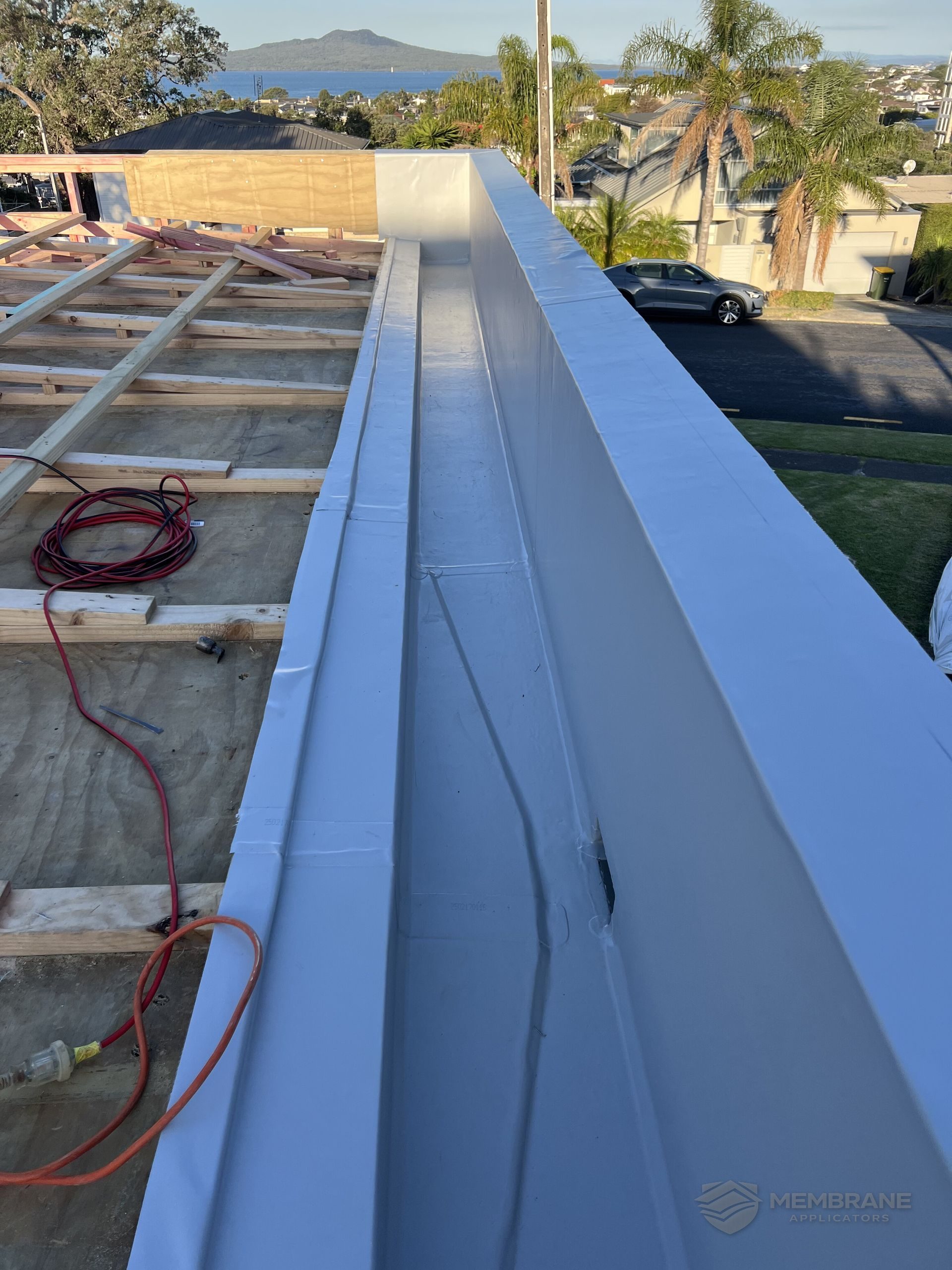
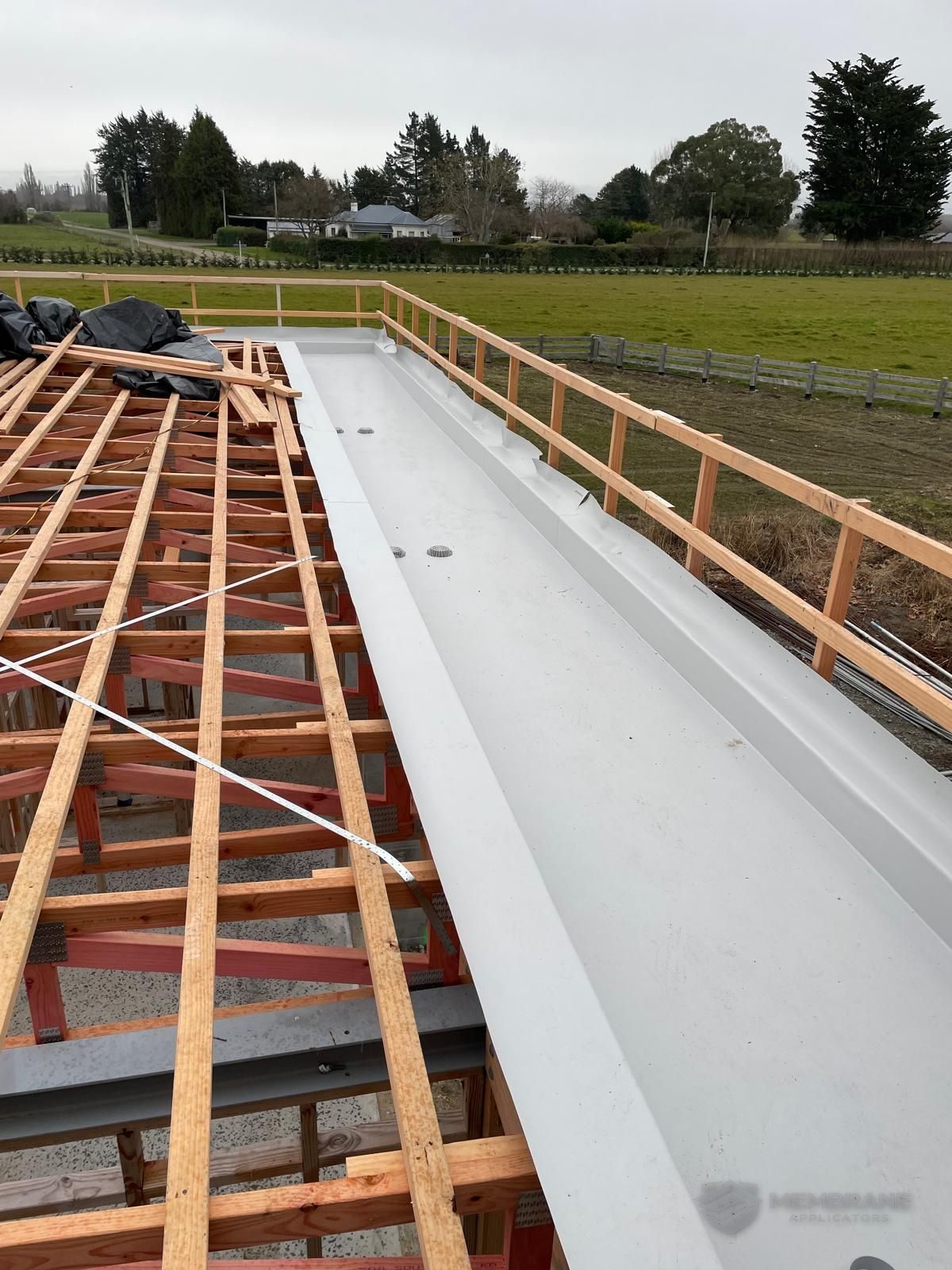
Internal and box gutters are lined continuously so the water that collects there is carried to the outlets, not into the building.
Scuppers and outlets
Rainwater outlets and scuppers are welded into the membrane and connected so the roof actually drains and does not pond.
Detailing FAQs
The open field of a membrane roof rarely fails. Leaks almost always start at a penetration, an upstand, a gutter or an outlet — the places where the membrane has to be cut, turned or joined to something else. That is why detailing is where the care has to go.
An upstand is where the membrane is turned up a vertical surface — a wall, a step, a door threshold — and terminated above the water line, so surface water cannot get behind or under the membrane.
Often, yes. Where the field membrane is still sound but a penetration, upstand or outlet is leaking, the detail can be reworked without redoing the whole roof. We tell you which after inspecting it.
Yes. Plant bases, ducting, cable trays and pipework are all penetrations that have to be flashed and sealed into the membrane. On commercial roofs this is usually the bulk of the detailing work.
A flat roof that does not drain properly holds water. Standing water finds every weak detail and adds load to the structure. Getting the falls, gutters, scuppers and outlets right is as important as the membrane itself.
Leak at a Detail, or Planning a New Roof?
Send us some photos or the site address and we will take a look.
Request a Quote